

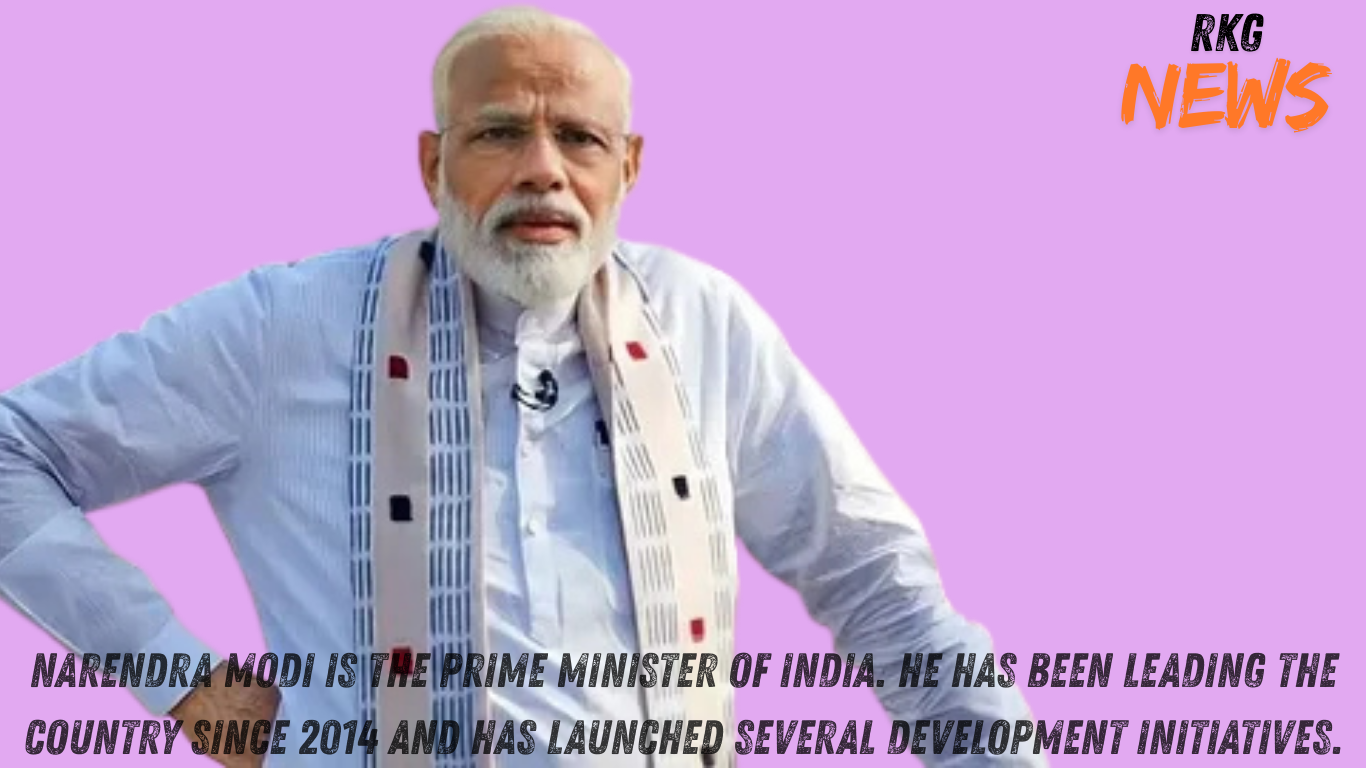
Narendra Damodardas Modi is one of India’s most prominent political leaders and has served as the Prime Minister of India since 2014. He is a senior leader of the Bharatiya Janata Party (BJP) and holds a significant place in modern Indian politics. His political journey is a story of his rise from a humble background to the highest office in the country. This article presents a balanced and detailed analysis of his life, education, political career, policies, achievements, and criticism.
1. Early Life and Family Background and narendra modi
Narendra Modi was born on September 17, 1950, in Vadnagar, a town in Mehsana district, Gujarat. His father, Damodardas Mulchand Modi, was a tea seller and his mother, Hiraben, was a homemaker. He was the third of six siblings.
It is said that as a child, he helped his father at his tea shop. Despite his modest financial circumstances, he continued his education. The circumstances of his early life strengthened his sense of self-reliance and hard work.
2. Education and Ideological Influence
Narendra Modi received his early education in Vadnagar. He later obtained a Master’s (M.A.) degree in Political Science. In his youth, he joined the Rashtriya Swayamsevak Sangh (RSS), which shaped his ideological development and organizational skills.
Working in the RSS, he imbibed the ideology of discipline, organization, and nationalism. This experience later proved crucial in his political career.
3. Beginning of Political Journey
In the 1970s, Narendra Modi became an active RSS pracharak. In the 1980s, he joined the Bharatiya Janata Party (BJP). Due to his work ethic and strategic thinking within the organization, he rose rapidly.
In the 1990s, he played a key role in the party’s organizational work. His contribution to formulating election strategies in Gujarat and other states was notable.
4. Chief Minister of Gujarat (2001–2014)
Narendra Modi became the Chief Minister of Gujarat in October 2001. During his tenure, numerous development projects were initiated in the state.
Key Initiatives:
- Promoting Industrial Investment
- Infrastructure Development
- Agricultural Reforms
- Improving Power Supply
- Convening the “Vibrant Gujarat” Summit
The Gujarat Model was presented as an example of economic development. However, during his tenure as Chief Minister, he faced criticism regarding the 2002 Gujarat riots. Several investigations were conducted into the matter, and a Supreme Court-appointed Special Investigation Team (SIT) exonerated him personally. Nevertheless, the incident remained a significant and controversial chapter in his political career.
5. 2014 General Elections and the Prime Ministership
In the 2014 Lok Sabha elections, the Bharatiya Janata Party declared Narendra Modi as its Prime Ministerial candidate. The BJP won an absolute majority, the first for a single party in 30 years.
Narendra Modi was sworn in as Prime Minister of India on May 26, 2014. This marked a significant turning point in Indian politics.
6. Major Policies and Schemes as Prime Minister
1. Swachh Bharat Mission
Launched on October 2, 2014, this campaign aimed to make the country open defecation-free and promote sanitation.
2. Make in India
Launched in 2014, this initiative aimed to make India a global manufacturing hub.
3. Jan Dhan Yojana
Under this scheme, bank accounts were opened for millions of people, promoting financial inclusion.
4. Digital India
Efforts were made to make government schemes online and transparent by promoting digital services.
5. Ujjwala Yojana
Free gas connections were provided to women from poor families.
6. Ayushman Bharat Yojana
Health insurance was provided to economically weaker sections.
7. Economic Decisions
Demonetization (2016)
On November 8, 2016, the demonetization of 500 and 1000 rupee notes was announced. The government’s objective was to curb black money, counterfeit currency, and terrorism. This decision was widely discussed and criticized. Supporters hailed it as a bold move, while critics questioned its economic impact.
Goods and Services Tax (GST)
The GST, implemented in 2017, unified the country’s tax system. Its aim was to create a “one nation, one tax” system.
8. Foreign Policy
Prime Minister Modi played an active role in foreign policy. He visited many countries and strengthened India’s global relations.
Key Initiatives:
- Strategic Partnership with the United States
- Efforts to Improve Relations with Neighboring Countries
- Active Participation in International Forums (e.g., G20, BRICS)
- Launch of the International Solar Alliance (ISA)
His foreign policy is considered to be based on active and personal diplomacy.
9. 2019 General Election
The BJP won more seats than ever before in the 2019 Lok Sabha elections. This demonstrates the confidence a large number of voters placed in its leadership.
10. Major Constitutional and Political Decisions
Revocation of Article 370 (2019)
The special status of Jammu and Kashmir was revoked. The government described it as a step towards national unity, while critics called it a decision that questioned the democratic process.
Citizenship Amendment Act (CAA)
This law aimed to grant citizenship to certain religious communities from neighboring countries. It witnessed both protests and support across the country.
11. Leadership During the COVID-19 Pandemic
India implemented a lockdown during the COVID-19 pandemic in 2020. The government launched a vaccination campaign and provided vaccines to several countries under the “Vaccine Maitri” initiative.
However, there were also criticisms regarding the problems faced by migrant workers and the economic impact of the lockdown.
12. Leadership Style
Narendra Modi’s leadership style is considered strong, decisive, and centralized. He is active in social media and public relations. He communicates with the public through the “Mann Ki Baat” program.
13. Criticisms and Controversies
Like any major political leader, Narendra Modi has faced criticism.
Major criticisms:
- Questions about the independence of democratic institutions
- Issues of unemployment
- Inflation and economic inequality
- Debates on freedom of expression
Supporters and opponents have different perspectives on these issues.
14. Supporters’ View
According to supporters:
- India’s global image strengthened
- Infrastructure improved
- Numerous schemes were launched for the poor
- Attempts were made to curb corruption
15. Critics’ View
Critics believe:
- Economic policies had mixed results
- Social polarization increased
- Some decisions lacked transparency
16. Personality and Public Image
Narendra Modi has the image of a hardworking, disciplined, and energetic leader. He is also known for his yoga, fitness, and simple lifestyle. He makes effective use of technology and social media.
17. Awards and Honors
- Honored with numerous international honors
- Awarded the highest civilian honors by various countries
- Regularly included in the list of global leaders
18. Future Challenges
In a vast and diverse country like India, the Prime Minister faces many challenges:
- Job creation
- Economic development
- Social harmony
- Environmental protection
- Global competitiveness
Addressing these challenges will influence future politics and policymaking.
Conclusion
Narendra Modi’s life is an inspiring story of his rise from a humble background to the highest office in the country. His political journey is an example of struggle, organizational ability, and determination. India has witnessed many significant changes under his leadership.
Although there have been differences of opinion regarding his policies and decisions, it is undeniable that he is a central and influential figure in 21st-century Indian politics.
His supporters consider him a symbol of development and strong leadership, while critics question his decisions. Differing opinions are natural in a democracy.
Narendra Modi’s political journey continues, and the direction and impact of his leadership in the coming years will be recorded as an important chapter in the history of Indian politics.