


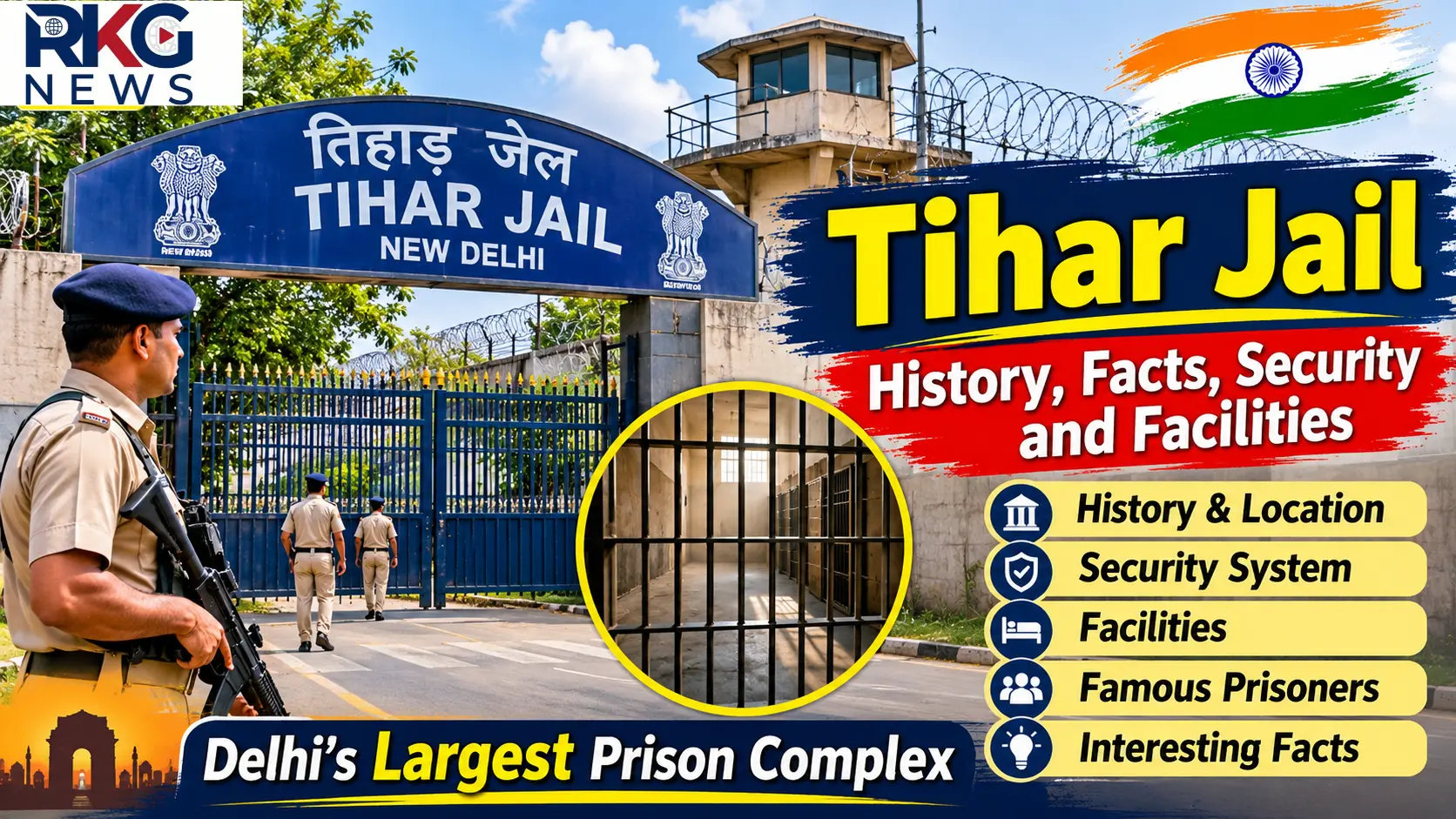
Tihar Jail is one of the most famous and largest prison complexes in India. Located in New Delhi, the capital of India, Tihar Jail is known for its history, security arrangements, large number of prisoners and important role in the Indian criminal justice system. Over the years, it has become a subject of national and international discussion because of several high-profile legal cases and its prison administration system.
Many people want to know what happens inside Tihar Jail, how many prisoners are kept there, what facilities are available, how the security system works and what daily life looks like for people living inside the prison. These questions have made Tihar Jail an interesting topic for people researching Indian prisons, law and government institutions.
Tihar Jail is not just a place where people are kept after being arrested or convicted. It is also a correctional institution where education, healthcare, vocational training and rehabilitation programmes are important parts of prison administration.
The prison complex has developed significantly since its establishment in 1958. Today, it consists of nine Central Jails and forms part of the larger Delhi Prisons system, which also includes Rohini and Mandoli prison complexes.
In this article, we will explore the complete history of Tihar Jail, its location, prison structure, facilities, security arrangements, famous prisoners, rules, daily routine and interesting facts. We will also answer some of the most frequently asked questions about Tihar Jail.
What Is Tihar Jail?
Tihar Jail is a major prison complex located in New Delhi, India. It operates under the Delhi Prisons Department, Government of the National Capital Territory of Delhi.
The prison is responsible for keeping individuals who have been sent to judicial custody by courts and people who are serving sentences after conviction. Its administration is responsible for maintaining security, discipline, healthcare and basic facilities for prisoners.
Tihar Jail is particularly famous because of its size and the number of separate prisons operating within the complex. It is also known for its association with several high-profile criminal investigations and court cases.
Apart from security and detention, the prison administration focuses on prisoner welfare, education, skill development and rehabilitation. These activities are intended to help prisoners prepare for their lives after release.
Why Is Tihar Jail So Famous?
There are several reasons why Tihar Jail is widely recognised across India.
First, it is one of the largest prison complexes in the country. Second, several well-known individuals have been held there in connection with major legal cases. Third, its prison administration and rehabilitation programmes have attracted public attention.
Tihar Jail is also frequently discussed in television news, newspapers, documentaries and online articles.
History of Tihar Jail
The history of Tihar Jail goes back to 1958. Before the establishment of the present Tihar prison complex, Delhi had a jail located in the Delhi Gate area.
In 1958, a Central Jail was commissioned at Tihar with an approved capacity of 1,273 prisoners. At that time, it was a much smaller facility compared with the large prison complex that exists today.
As Delhi’s population increased, the requirement for additional prison accommodation also grew. The administration gradually constructed more prison buildings and expanded its facilities.
Over the years, new Central Jails were added to accommodate different categories of prisoners and improve prison management.
Important Timeline of Tihar Jail History
The following table explains some important developments in the history of Tihar Jail and the wider Delhi prison system.
| Year | Development |
|---|---|
| 1958 | Central Jail started operating at Tihar with a sanctioned capacity of 1,273 prisoners. |
| 1980 | A District Jail was constructed with a capacity of 740 prisoners. |
| 1984–85 | The original Central Jail was divided into three separate jails. |
| 1990 | District Jail became Central Jail No. 4. |
| 1996 | Central Jail No. 5 was established for young adult prisoners. |
| 2000 | Central Jail No. 6 was opened for women prisoners. |
| 2003 | Central Jail No. 7 was commissioned. |
| 2004 | Rohini District Jail was commissioned. |
| 2005 | Central Jail No. 8 and No. 9 became operational. |
| 2016–17 | Several new prisons at Mandoli became operational. |
These developments transformed Tihar from a single Central Jail into a large prison complex. The official Delhi Prisons history records these expansion milestones.
How Did Tihar Jail Become So Large?
The expansion of Tihar Jail was connected to the increasing need for prison accommodation in Delhi.
As the number of prisoners increased, the government introduced additional facilities. Separate arrangements were also developed for women prisoners, young adult inmates and prisoners requiring specialised security management.
The development of Rohini and Mandoli prison complexes further expanded Delhi’s overall prison infrastructure.
Where Is Tihar Jail Located?
Tihar Jail is situated in the western part of New Delhi, India. It is located in the Tihar area and comes under the administration of the Delhi Prisons Department.
The headquarters of Delhi Prisons is located near Lajwanti Garden Chowk, Janak Puri, New Delhi.
Because it is located in the national capital, Tihar Jail is an important part of Delhi’s judicial and correctional administration.
Is Tihar Jail Located in Delhi or New Delhi?
Tihar Jail is located in Delhi, specifically in the western part of the city. People commonly refer to its location as New Delhi because Delhi is India’s national capital.
How Many Prisons Are There in Tihar Jail?
One of the most frequently searched questions about Tihar Jail is how many separate prisons are located inside the complex.
According to the official Delhi Prisons website, Tihar has nine Central Jails. However, the complete Delhi prison system has three major prison complexes: Tihar, Rohini and Mandoli.
Each complex has its own prison facilities and administrative arrangements.
Delhi Prison Complexes and Number of Jails
The following table explains the structure of the Delhi prison system.
| Prison Complex | Location | Number of Jails |
|---|---|---|
| Tihar Jail | West Delhi | 9 |
| Rohini Jail | North Delhi | 1 |
| Mandoli Jail | North-East Delhi | 6 |
| Total | Delhi | 16 |
This means that Tihar is not the only prison complex in Delhi. Rohini and Mandoli are also important parts of the Delhi Prisons administration.
Why Are There Different Prison Sections?
Different prison sections help the administration manage prisoners according to their legal status, age, gender and security requirements.
For example, separate facilities are available for women prisoners and certain categories of prisoners requiring specialised arrangements.
This classification helps prison authorities organise administration, supervision and prisoner welfare activities.
Tihar Jail Security System
Security is one of the most important responsibilities of any prison administration. Tihar Jail accommodates a large prison population, so maintaining discipline and safety is a major responsibility.
The prison administration uses surveillance technology, trained personnel and administrative procedures to maintain security within the complex.
CCTV Surveillance
CCTV cameras are an important part of modern prison management. They help authorities monitor different areas and maintain general supervision.
Surveillance systems also assist prison staff in reviewing incidents and supporting the safety of prisoners and employees.
Security Personnel
Prison staff members are responsible for maintaining discipline, supervising prisoners and implementing prison regulations.
The wider Delhi Prisons security arrangements also involve designated police and security forces for specific responsibilities, including external security and prisoner transportation.
High-Security Prison Facilities
Tihar has a dedicated high-security facility known as Central Jail No. 15.
It became operational in March 2017 with a sanctioned capacity of 248 prisoners. Such specialised facilities are intended for inmates who require different security and administrative arrangements.
What Facilities Are Available Inside Tihar Jail?
Many people believe that a prison only provides accommodation and food. However, modern prison administration includes several other facilities that support prisoners’ health, education and rehabilitation.
Tihar Jail has been associated with different programmes intended to improve prisoners’ living conditions and help them develop useful skills.
1. Food and Drinking Water
Food is an essential requirement for every prisoner. The prison administration makes arrangements for regular meals according to its rules and procedures.
Basic arrangements for drinking water and other daily requirements are also part of prison management.
2. Medical Facilities
Healthcare is another important responsibility of prison authorities.
Prisoners may require medical attention for different health conditions, injuries or other medical needs. Delhi Prisons provides healthcare arrangements through prison medical services and referrals to outside hospitals when required.
3. Educational Facilities
Education can help prisoners improve their knowledge and prepare for a better future.
Educational programmes may include basic literacy, formal studies and opportunities to continue education through recognised institutions.
Delhi Prisons has also reported educational arrangements connected with institutions such as IGNOU and the National Institute of Open Schooling.
4. Vocational Training
Vocational training helps prisoners develop practical skills that may be useful after their release.
Depending on the available programmes, training can involve different types of work, production activities and skill development.
The purpose is to improve employment opportunities and encourage self-reliance.
5. Legal Aid Facilities
Access to legal assistance is an important part of the justice system.
Prisoners who cannot afford private legal representation may receive assistance through legal services authorities, subject to eligibility and applicable procedures.
This helps individuals understand their legal rights and participate in court proceedings.
6. Sports and Recreational Activities
Sports and recreational activities can support physical fitness, discipline and social interaction.
Such activities also help prisoners participate in constructive programmes and maintain a structured routine.
Important Facilities Available in Delhi Prisons
| Facility | Main Purpose |
|---|---|
| Medical Services | Healthcare and medical attention |
| Education | Literacy and academic learning |
| Vocational Training | Practical skill development |
| Legal Aid | Access to legal assistance |
| Sports Activities | Physical fitness and recreation |
| Rehabilitation | Preparation for life after release |
| Family Meetings | Maintaining family relationships |
The availability of specific facilities may differ between prison facilities and according to administrative arrangements.
What Is Daily Life Like Inside Tihar Jail?
Life inside Tihar Jail is very different from ordinary life outside prison. Prisoners must follow an organised schedule and comply with the rules established by prison authorities.
Daily activities generally include meals, personal hygiene, work assignments, educational activities and other authorised programmes.
The exact daily routine can differ according to the prison, security classification, individual circumstances and administrative requirements.
Daily Routine of Prisoners
A general prison routine may include the following activities:
- Morning activities and personal hygiene.
- Breakfast according to the prison schedule.
- Assigned work, education or other authorised activities.
- Lunch and scheduled rest.
- Recreational or rehabilitation activities.
- Evening meals and preparation for the night.
This is a general description and should not be considered an official timetable for every prison inside Tihar.
Can Prisoners Meet Their Families?
Yes. Prisoners can receive authorised meetings with family members and friends according to applicable prison rules.
Delhi Prisons provides arrangements for interviews with prisoners. Its official FAQ describes scheduled meeting arrangements and a tele-booking facility for Tihar Central Jails.
Family meetings are important because they help prisoners maintain relationships and receive support from people outside prison.
Tihar Jail Rules and Regulations
Every prison operates according to established rules and regulations. Tihar Jail follows applicable Delhi Prison Rules and other relevant legal provisions.
These rules help maintain discipline, protect prisoners’ rights and ensure the proper functioning of prison administration.
Important Areas Covered by Prison Rules
Prison rules generally cover:
- Prison discipline and conduct.
- Personal belongings and permitted items.
- Family meetings and communication.
- Healthcare and medical attention.
- Educational and vocational activities.
- Legal assistance and court procedures.
- Complaints and grievance procedures.
Prisoners are expected to follow applicable rules. At the same time, prison authorities must respect their legal rights and human dignity.
Famous Prisoners Associated With Tihar Jail
Tihar Jail has frequently appeared in Indian news because several well-known individuals have been held there in connection with major investigations and legal cases.
These cases have attracted national attention because of their political, financial, social or legal significance.
However, it is important to understand that being held in jail does not automatically mean a person has been convicted. Some individuals are undertrial prisoners whose cases are still being heard by courts.
Why Do High-Profile Prisoners Attract Attention?
When a person associated with politics, business, entertainment or another public field is held in Tihar Jail, the case often receives significant media coverage.
News reports may discuss the investigation, court hearings, bail applications and other legal developments.
The prison itself becomes part of public discussion because it is responsible for keeping such individuals in judicial custody.
Are All Prisoners in Tihar Convicted?
No. Tihar Jail houses both convicted prisoners and undertrial prisoners.
A convicted prisoner is someone who has been found guilty by a competent court. An undertrial prisoner is someone whose case has not yet reached a final decision.
This distinction is important because a person should not be considered guilty simply because they are in judicial custody.
Is Tihar Jail the Largest Prison in India?
Tihar is widely recognised as one of the largest prison complexes in India and the world.
Its nine Central Jails, extensive infrastructure and large prisoner population make it an important institution in the country’s prison administration system.
However, the term largest can depend on the measurement used, such as land area, sanctioned capacity or actual prisoner population.
The official Delhi Prisons website describes Tihar as one of the largest prison complexes in the world.
How Much Land Does Tihar Jail Cover?
Official Delhi Prisons documents describe the Tihar prison complex as covering approximately 400 acres.
The campus includes prison buildings, administrative facilities, staff-related infrastructure and other essential facilities.
Tihar Jail Overcrowding: Why Is It a Major Concern?
Overcrowding is one of the major challenges faced by prison administrations in India.
According to the Delhi Prisons official website, the combined sanctioned capacity of all 16 Delhi prisons is 10,026 inmates. The website has reported an overall prison population of approximately 19,500 inmates.
These figures refer to the entire Delhi prison system, not Tihar Jail alone. Prison population figures can change over time.
Why Does Prison Overcrowding Happen?
Several factors can contribute to overcrowding:
- A growing number of people entering judicial custody.
- Delays in completing court proceedings.
- A high number of undertrial prisoners.
- Limited prison accommodation.
- Administrative and infrastructure challenges.
Overcrowding can create difficulties for prison management, healthcare, accommodation and other basic services.
How Does Overcrowding Affect Prisoners?
When the number of prisoners becomes significantly higher than the sanctioned capacity, maintaining suitable living conditions becomes more challenging.
It can put additional pressure on healthcare, sanitation, accommodation and other facilities.
For this reason, improving prison infrastructure and ensuring timely legal proceedings are important parts of prison reform.
Difference Between Tihar Jail, Rohini Jail and Mandoli Jail
Many people think that Tihar, Rohini and Mandoli are three names for the same prison. However, they are separate prison complexes operating under the Delhi Prisons Department.
Tihar Jail
Tihar is the main and historically established prison complex. It contains nine Central Jails and is widely recognised because of its size and history.
Rohini Jail
Rohini is a separate prison complex located in North Delhi. It was commissioned in 2004 and operates as part of the Delhi Prisons system.
Mandoli Jail
Mandoli is another prison complex located in North-East Delhi near the Uttar Pradesh border.
It was developed to increase prison accommodation and reduce pressure on the existing facilities.
The complex contains six Central Jails and has additional infrastructure, including educational and healthcare facilities.
What Happens to Prisoners After Their Release From Tihar Jail?
Rehabilitation is an important objective of modern prison administration.
The purpose of rehabilitation is to help individuals prepare for a responsible life after completing their sentence or obtaining release through applicable legal procedures.
Returning to society can involve different challenges, including finding employment, rebuilding family relationships and adjusting to everyday responsibilities.
Skill Development and Employment
Vocational training can help former prisoners develop practical abilities that may support future employment.
Learning useful skills can improve confidence and create opportunities to earn a livelihood after release.
Education and Personal Development
Education can play an important role in rehabilitation.
Prisoners who participate in educational activities may improve their literacy, knowledge and professional abilities.
Family and Social Support
Family support can help individuals adjust to life outside prison.
Maintaining positive relationships and receiving guidance from family members can make the rehabilitation process easier.
Interesting Facts About Tihar Jail
Tihar Jail has a long history and several interesting features that make it an important subject of public interest.
Here are some facts worth knowing:
- Tihar Jail was established in 1958.
- It is located in the western part of New Delhi.
- The Tihar complex contains nine Central Jails.
- It is part of the wider Delhi Prisons administration.
- Official documents describe the complex as covering approximately 400 acres.
- Central Jail No. 6 was established for women prisoners in 2000.
- Central Jail No. 15 is a dedicated high-security facility.
- The Delhi prison system includes Tihar, Rohini and Mandoli complexes.
- Prisoners can participate in educational and vocational programmes.
- Healthcare and legal assistance are important parts of prison administration.
- Tihar has been associated with several high-profile legal cases.
- Prison administration includes rehabilitation and correctional activities.
Why Is Tihar Jail Important to India’s Justice System?
Tihar Jail plays an important role in India’s criminal justice system because it accommodates individuals who are sent to judicial custody by courts and people serving sentences.
Prisons are an essential part of the legal system, but their responsibilities extend beyond keeping prisoners in custody.
They must also ensure that legal rights are respected, healthcare is available and appropriate rehabilitation opportunities are provided.
The Supreme Court of India has recognised important principles concerning the dignity and human rights of prisoners. A person does not lose all human rights simply because they are in prison.
Delhi Prisons also identifies reformation and rehabilitation as important objectives of its administration.
Frequently Asked Questions About Tihar Jail (FAQs)
1. Where is Tihar Jail located?
Tihar Jail is located in the western part of New Delhi, India. It is administered by the Delhi Prisons Department.
2. When was Tihar Jail established?
Tihar Jail was established in 1958. Initially, the Central Jail had a sanctioned capacity of 1,273 prisoners.
3. How many jails are there in Tihar?
The Tihar prison complex has nine Central Jails. The complete Delhi prison system has 16 prisons across Tihar, Rohini and Mandoli.
4. Why is Tihar Jail famous?
Tihar Jail is famous because of its large prison complex, long history, security arrangements, high-profile legal cases and prisoner rehabilitation programmes.
5. Is Tihar Jail the largest jail in Asia?
Tihar is widely described as one of the largest prison complexes in the world. However, an exact ranking depends on whether land area, prisoner population or sanctioned capacity is considered.
Conclusion: Tihar Jail and Its Role in India
Tihar Jail is one of the most important prison institutions in India. Established in 1958, it has developed from a single Central Jail into a large prison complex containing nine Central Jails.
Its history, infrastructure, security arrangements, healthcare facilities, educational activities and rehabilitation programmes make it an important part of India’s criminal justice system.
At the same time, challenges such as overcrowding, healthcare requirements and prisoner welfare highlight the need for continuous improvements in prison infrastructure and administration.
A modern prison system should not only maintain security but also provide opportunities for education, personal development and rehabilitation. Tihar Jail’s role reflects the importance of balancing these responsibilities.
For readers interested in Indian history, law, government institutions and important national developments, Tihar Jail remains a subject worth understanding.
Stay connected with RKG News for more informative articles about India, government institutions, technology, education and current affairs.
Sources
Tihar Jail History and Development
Official Information About Tihar Jail
Prison Facilities, Medical Care and Rules