

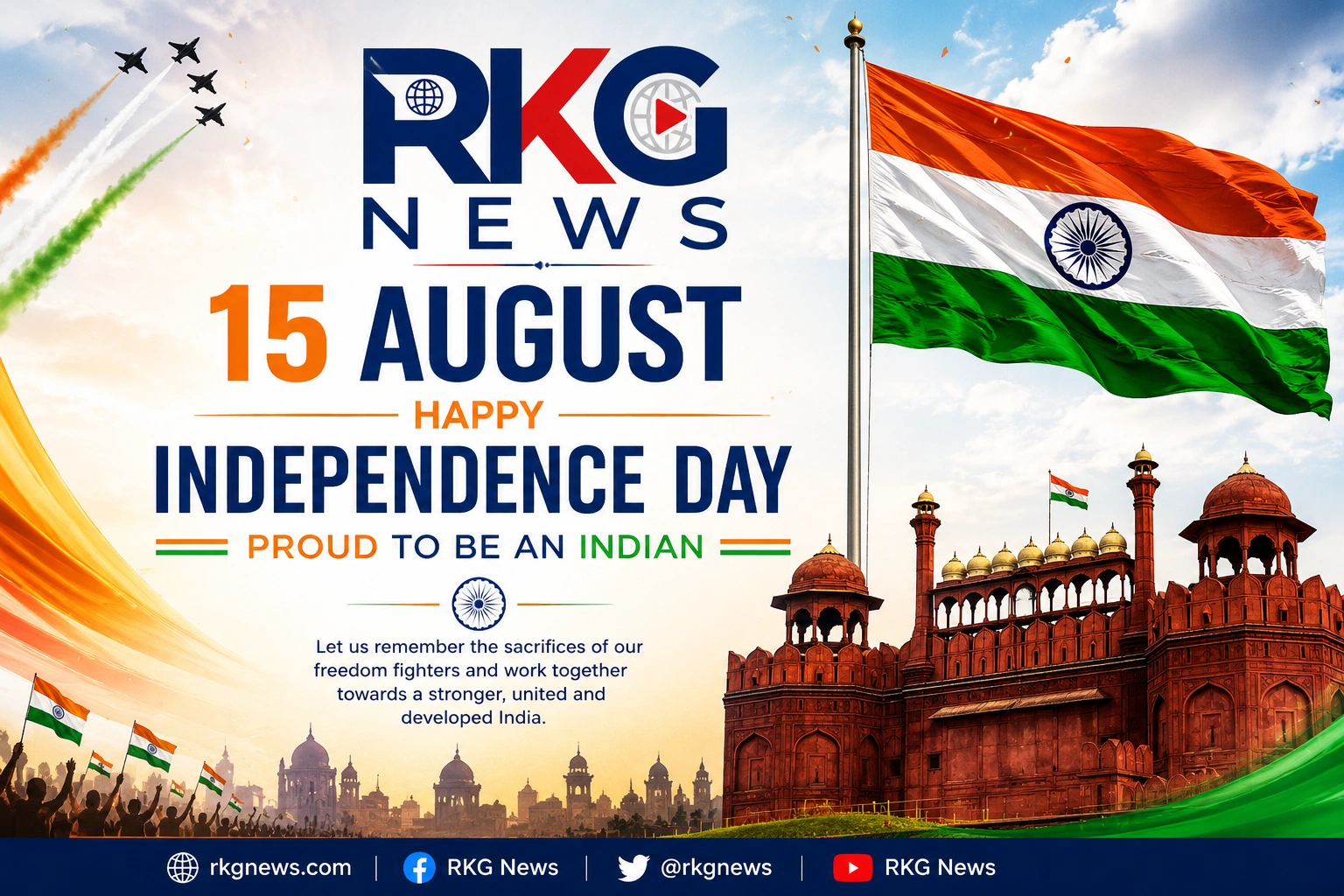
15 August Independence Day is one of the most important national occasions in India, celebrated every year to commemorate the country’s independence from British rule on 15 August 1947. India achieved freedom after a long and significant struggle involving national leaders, freedom fighters, social reformers and millions of ordinary citizens. The occasion represents freedom, self-government, national unity and the beginning of a new chapter in India’s history. 15 August Independence Day in 2026 is particularly significant because India will observe its 80th Independence Day. The occasion is marked by flag-hoisting ceremonies, patriotic speeches, cultural programmes, school events and community celebrations across the country. The main national ceremony traditionally takes place at the Red Fort in New Delhi, where the Prime Minister unfurls the National Flag and addresses the nation.
Why Is 15 August Celebrated in India?
The primary reason for celebrating 15 August Independence Day is that India became independent from British colonial rule on 15 August 1947. The achievement ended a long period of colonial governance and gave India the opportunity to develop its own political and democratic institutions.
The meaning of 15 August Independence Day goes beyond a historical date. It reminds citizens of the sacrifices, determination and collective efforts that contributed to India’s freedom movement. It is also a time to think about the responsibilities associated with freedom, democracy, equality and national development.
For students and younger generations, 15 August Independence Day offers an important opportunity to understand India’s past and learn how the country developed from a colony into an independent democratic nation.
History of 15 August 1947
The history behind 15 August Independence Day began long before 1947. India’s freedom movement developed over many years and included political campaigns, public movements, protests, civil resistance and revolutionary activities.
Prominent figures such as Mahatma Gandhi, Jawaharlal Nehru, Sardar Vallabhbhai Patel, Subhas Chandra Bose, Bhagat Singh and many others became associated with different stages of the struggle. Millions of people also contributed without receiving the same level of recognition in mainstream historical accounts.
The movement included different political ideas and methods, but the demand for independence gradually became a powerful national force. On 15 August 1947, India finally became an independent nation, creating the historical foundation for the modern Indian state.
What Happened on 15 August 1947?
The year 1947 marked a major turning point in South Asian history. India achieved independence after British rule came to an end, while the partition of British India resulted in the creation of India and Pakistan.
The transition was accompanied by large-scale migration, communal violence and severe humanitarian suffering. Therefore, understanding 15 August Independence Day requires both an appreciation of the achievement of freedom and an awareness of the difficult circumstances surrounding independence.
Despite the challenges of the period, 15 August became a defining national date. It represented India’s emergence as a sovereign country and opened the way for institution-building, democratic governance and constitutional development.
How Is Independence Day Celebrated?
Celebrations connected with 15 August Independence Day take place at national, state and local levels. Schools, colleges, government offices, residential communities and organisations commonly organise special programmes.
Typical activities include flag hoisting, patriotic songs, speeches, cultural performances, essay competitions, quizzes, drawing events and educational presentations. Many schools conduct special assemblies where students learn about India’s freedom struggle and national symbols.
Communities may also decorate public spaces, display the Tricolour and organise cultural programmes. Television and digital platforms broadcast Independence Day events, historical features and national addresses, allowing people to participate from home.
Red Fort and the National Ceremony
The Red Fort in New Delhi has a special place in India’s national celebrations. The Prime Minister traditionally unfurls the National Flag from the Red Fort and delivers the Independence Day address to the nation.
This ceremony is one of the most recognisable traditions associated with 15 August Independence Day. It is widely watched across India and covered by national media.
The Red Fort ceremony also provides an opportunity for the government to reflect on national achievements, challenges, development priorities and future goals. The combination of the historic monument, the Tricolour and the Prime Minister’s address has made the event an important part of India’s national identity.
15 August 2026: What Makes This Year Special?
15 August Independence Day in 2026 will be significant because India is celebrating its 80th Independence Day. According to the Government of India’s calendar, 15 August 2026 falls on a Saturday.
The 80th anniversary offers an opportunity to reflect on India’s journey since 1947. During these decades, India has experienced major changes in education, science, technology, infrastructure, agriculture, industry, communication and democratic participation.
The milestone is therefore not only about remembering history. It is also an opportunity to consider India’s achievements, current priorities and aspirations for the future.
Why Is the Indian Tricolour Important?
The Indian National Flag is one of the most important symbols associated with 15 August Independence Day. It is displayed prominently at government ceremonies, schools, colleges and community events.
The Tricolour contains saffron, white and green horizontal bands with the navy-blue Ashoka Chakra in the centre. The National Portal of India explains the significance attached to the colours and the Ashoka Chakra. The flag represents India’s sovereignty, identity and national unity.
During Independence Day celebrations, the Tricolour creates a strong visual connection between modern India and the historic achievement of independence.
Importance of Independence Day for Students
For students, 15 August Independence Day is an important educational occasion. It allows young people to learn about the freedom movement, national leaders, historical events and the values associated with independence.
Schools often organise speeches, essay writing, quizzes, drawing competitions, debates, cultural performances and patriotic activities. These programmes make historical learning more engaging and help students understand why independence remains important today.
The occasion can also encourage students to think about civic responsibility. Respecting the Constitution, following laws, protecting public property, helping others and contributing positively to society are practical aspects of responsible citizenship.
Independence Day and National Unity
India is known for its remarkable diversity of languages, cultures, traditions and regional identities. 15 August Independence Day provides a common national occasion that brings people together around a shared historical experience.
The freedom struggle itself involved participation from people belonging to different regions and social backgrounds. Although individuals and organisations sometimes followed different ideologies or methods, the broader goal of independence became a powerful unifying force.
Today, the celebration continues to highlight the importance of unity while recognising India’s diversity. It reminds citizens that different identities can coexist within a shared national framework.
Role of Women in the Freedom Movement
Women made important contributions to India’s independence movement. Figures such as Sarojini Naidu, Aruna Asaf Ali, Annie Besant, Kasturba Gandhi and many others played significant roles in political mobilisation, social movements and resistance.
Thousands of women whose names are less familiar also participated in protests, organised activities, supported movements and challenged colonial authority.
Remembering these contributions makes the history behind 15 August Independence Day more complete and shows that India’s struggle for independence involved people from many sections of society.
Independence Day and Indian Democracy
India’s independence laid the foundation for the development of its democratic system. However, independence and the creation of the Republic were two separate milestones.
The Constitution of India came into force on 26 January 1950, which is celebrated as Republic Day. This distinction is important because 15 August Independence Day commemorates freedom from British rule, while Republic Day marks the constitutional transformation of India into a republic.
Together, these two national occasions represent important stages in India’s journey toward self-government and constitutional democracy.
Independence Day vs Republic Day
| National Occasion | Date | Main Significance |
|---|---|---|
| Independence Day | 15 August | Commemorates India’s independence from British rule in 1947 |
| Republic Day | 26 January | Commemorates the Constitution coming into force in 1950 |
Understanding the difference between these dates helps students and readers avoid a common confusion. 15 August Independence Day focuses on the achievement of national independence, while 26 January focuses on India’s constitutional republic.
How Can People Celebrate 15 August?
People can celebrate 15 August Independence Day through meaningful educational, cultural and community activities. Schools can organise history-based quizzes, essay competitions and patriotic programmes. Families can read about India’s freedom movement, watch educational documentaries or discuss the contributions of freedom fighters.
Community celebrations can include flag-hoisting, cultural performances and cleanliness or awareness activities. Such efforts make the occasion more meaningful by connecting patriotism with positive action.
For children, simple activities such as drawing the Indian Flag, writing an Independence Day speech or learning about important historical events can create a stronger understanding of the occasion.
Key Facts About 15 August 2026
| Fact | Details |
| Date | 15 August 2026 |
| Day | Saturday |
| Occasion | India’s Independence Day |
| Independence achieved | 15 August 1947 |
| Independence Day in 2026 | 80th |
| Main national venue | Red Fort, New Delhi |
| National flag | Indian Tricolour |
| Republic Day | 26 January |
These facts make it easier to understand the historical and national significance of 15 August Independence Day in 2026.
Frequently Asked Questions
1. Why is 15 August celebrated as Independence Day?
15 August Independence Day is celebrated because India became independent from British colonial rule on 15 August 1947. It honours the freedom movement and the sacrifices associated with India’s independence.
2. Which Independence Day will India celebrate in 2026?
India will celebrate its 80th Independence Day on 15 August 2026. The date falls on a Saturday.
3. Where is the main Independence Day ceremony held?
The main national ceremony for 15 August Independence Day is traditionally held at the Red Fort in New Delhi, where the Prime Minister unfurls the National Flag and addresses the nation.
4. What is the difference between Independence Day and Republic Day?
15 August Independence Day marks India’s independence from British rule in 1947, while Republic Day on 26 January commemorates the Constitution of India coming into force in 1950.
- Red Fort Flag Hoisting Tradition
- Why is the Indian Flag Hoisted at the Red Fort?
- 26 January – Republic Day of India
Also read : Republic Day in India: Its History, Meaning, Celebrations, and National Pride